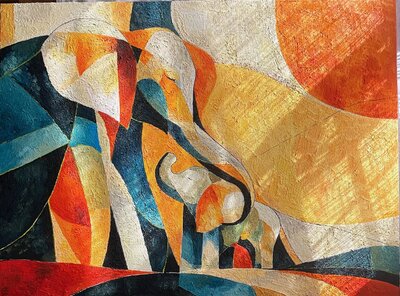
Every original painting should travel through its life with one document beside it: its Certificate of Authenticity. Think of it as the work’s identity papers. The painting speaks for itself at a glance; the certificate speaks for it on paper — who made it, what exactly it is, and that the artist stands behind the attribution. If you collect originals, you will accumulate these documents. Here is how to read them, and how to keep them doing their job.
What a proper certificate includes
- The artist’s name and signature — signed by the artist or the artist’s studio, not printed by a marketplace.
- The title of the work — exactly as it appears in the artist’s records.
- Medium and support — for example, oil on canvas, with dimensions stated.
- The year of completion and, ideally, a unique work identifier from the artist’s own registry.
- A statement of originality — that this is a one-of-one original work by the artist’s hand.
- An image of the work — many good certificates carry a photograph, tying the paper to this specific object rather than to a title that could be shared by another piece.
Every Jinia original ships with a signed certificate on this pattern: title, medium, dimensions, year, and the work’s registry number (the ART number on its artwork page), signed by the artist. The number matters more than it might seem — it is how the studio can confirm, years from now, that a specific canvas is the recorded original.
What a certificate can’t do
A certificate is evidence, not magic. It doesn’t guarantee a future price, and a certificate from an unknown seller for an unknown artist carries little weight — paper is easy to print. Its value comes from the chain behind it: a real artist or studio, with records, whose registry entry matches the document. This is one more reason to buy originals from the artist’s own studio or a gallery that works directly with them: the shorter the chain, the stronger the paper.
How to store it
- Not taped to the painting. Tape and adhesives damage both paper and canvas over time, and the document should survive independently of the object.
- With your household records — the same place you keep insurance documents. A photograph or scan in cloud storage is a sensible backup.
- With the invoice. Certificate + proof of purchase together are what an insurer, an estate, or a future buyer will ask for.
- Tell your family where it is. Paintings outlive their first owners; the certificate is how the work’s story — and attribution — travels with it.
When a painting arrives, take five minutes: check the certificate against the work (title, dimensions, signature on the canvas), file it properly, and photograph the back of the canvas while you’re at it. It is the cheapest insurance a collector ever arranges. Our first-time collector’s checklist covers the certificate alongside the other six checks worth making before any original ships.