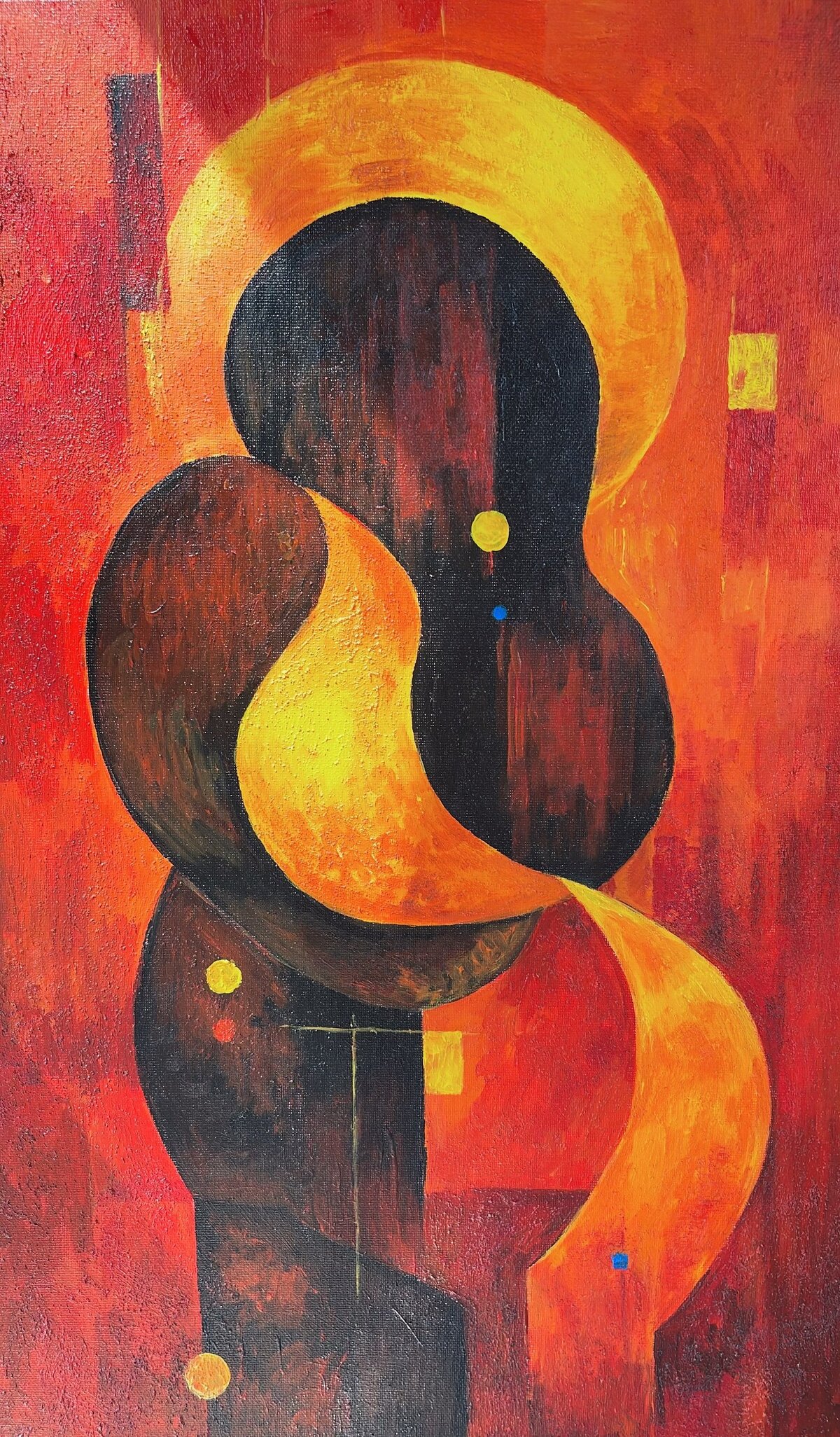
An original painting and a print of that painting can show the same image. They are not the same object, and the price difference between them is not a markup trick — it is the cost of two completely different things. This guide explains what each one actually is, what your money buys in each case, and how to tell them apart when you’re shopping online.
What an original is
An original painting is a single physical object that an artist built by hand: paint mixed, laid down, revised, and finished on one canvas. Only one exists. What you are buying is that object — including its surface. Real paint has topography. Thick passages (impasto) catch the light and cast tiny shadows, so the painting changes as you move through the room and as the day changes the light. A color that looks burnt orange at noon can glow like an ember at dusk. That behavior is not a detail; for many collectors it is the entire reason to own the thing.
What a print is
A print is a reproduction: a photograph or scan of the painting, output by a machine onto paper or canvas. Good printing — giclée included — is a real craft and produces handsome, affordable decoration. But every copy is essentially identical, the surface is flat (any “texture” is a picture of texture), and the file it came from can always produce more. Prints are a perfectly good choice for many rooms. They are simply a different purchase: image, not object.
So what does the higher price buy?
- Scarcity that is structural, not staged. An original exists once. When it’s gone, it’s gone — there is no restock, no second run.
- The surface. Layered paint, visible decisions, the record of the work being made. This is the part no reproduction carries.
- The artist’s hand and time. One object absorbed all of it; a print run divides it by the number of copies.
- Documentation. A serious original comes signed, with a Certificate of Authenticity that ties that specific object to the artist.
One honest caution: buy an original because you want to live with it, not as a financial instrument. Prices for living artists move with reputation and demand, and no seller can promise appreciation. The return an original reliably pays is the daily one — a real surface, in your light, that a photograph of it cannot imitate.
Words that blur the line
Most confusion comes from careful wording rather than outright lies. Slow down when a listing says hand-embellished (a print with some paint brushed over it, often not by the artist), canvas art or wall art with no medium stated, or shows a price that would be remarkable for a hand-painted work of that size. An honest listing states plainly what the object is: an original painting, or a print — with the process named.
How to tell, when you can’t touch it
Online, ask for evidence a holder of a real painting can always provide: close photographs of the surface at an angle (real impasto rakes light; printed texture doesn’t), a photograph of the edges and the back of the canvas, and the certificate. At Jinia Art, every artwork page carries detail photographs of the actual surface for exactly this reason — texture you can inspect before you ever inquire. Every work here is a one-of-one original, hand-signed, with a signed Certificate of Authenticity; there are no prints of them, here or anywhere else.
If you’re deciding between the two, start by standing in the room and asking what the wall is for. Decoration fills space. An original holds it. Browse the current originals or read more about the artist.